
[et_pb_section bb_built=”1″ fullwidth=”on” _builder_version=”3.0.47″ next_background_color=”#000000″][et_pb_fullwidth_post_title meta=”off” featured_placement=”background” text_background=”on” text_bg_color=”rgba(255,255,255,0.68)” _builder_version=”3.0.47″ title_font=”|on|||” title_font_size=”35px” background_color=”rgba(255,255,255,0.97)” parallax=”on” parallax_method=”on” parallax_effect=”on” module_bg_color=”rgba(255,255,255,0.97)” use_border_color=”off” border_color=”#ffffff” border_style=”solid” /][/et_pb_section][et_pb_section bb_built=”1″ admin_label=”section” _builder_version=”3.0.47″ prev_background_color=”#000000″][et_pb_row admin_label=”row” _builder_version=”3.0.47″ background_size=”initial” background_position=”top_left” background_repeat=”repeat”][et_pb_column type=”3_4″][et_pb_divider disabled_on=”on|on|off” _builder_version=”3.0.47″ hide_on_mobile=”on” /][et_pb_text _builder_version=”3.0.105″ use_border_color=”off” border_color=”#ffffff” border_style=”solid”]
This is part two of the Encaustic 101 series.
Encaustic paint is, at it’s most basic and traditional, three components: beeswax, damar resin, and pigment. The wax and resin blend is called encaustic medium. There are a myriad of variations on the exact proportions of wax and resin for encaustic medium; however, the generally recommended starting point by AMIEN is 8:1 to 10:1 beeswax to damar resin, by weight. Some mixes involve additional wax types – paraffin and microcystaline are just two I’ve seen discussed. It is NOT uncommon for people who paint encaustic frequently work with encaustic paint to make their own paint from scratch with their own preferred balance of wax and resin.
That said, for our intents and purposes, we’re going to keep it simple and traditional.
[/et_pb_text][et_pb_divider disabled_on=”on|on|off” _builder_version=”3.0.47″ hide_on_mobile=”on” /][et_pb_text _builder_version=”3.0.105″ use_border_color=”off” border_color=”#ffffff” border_style=”solid”]
Beeswax
This is exactly what it sounds like. Wax from bee hives. That yellow stuff you see expensive, gloriously-smelling candles made from? Yep, that stuff. Only, frequently, the beeswax used in encaustic painting has been cleaned or bleached so instead of that luminous yellow, we have an ethereal and translucent white wax.
Beswax is used in encaustic paint for several of it’s properties, one of the most notable is that it’s easy to melt and spread at low temperatures (145 F/63 C), and it cools quickly at room temperature. It’s translucency is another property that is frequently exploited in encaustic painting; a thin layer of encaustic over a photo in a collage piece gives a soft luminescence without completely obscuring the lower layers. (Light passes through it, and back to our eyes, but not fully. This can give works in encaustic a softer, sometimes dream-like quality. Beeswax also imparts a flexibility to cooled encaustic paint, which if you’ve ever played with candle wax from a beeswax candle, you’re probably already familiar with. It holds up well over time, as long as temperatures don’t get too extreme. Beeswax is usually bleached to white (with one method or another, there are quite a few) so pigments (color!) don’t end up being yellowed from unbleached beeswax’s yellow color. Not always, though.
However, beeswax will, over time, develop what is known as bloom – a clouding of the surface. Bloom reduces the translucency of the wax surface, and is why many, many encaustic painters buff their works before a show, and why it is not uncommon to buff encaustic pieces (gently!) in your own collection.
[/et_pb_text][et_pb_divider disabled_on=”on|on|off” _builder_version=”3.0.47″ hide_on_mobile=”on” /][et_pb_text _builder_version=”3.0.105″ use_border_color=”off” border_color=”#ffffff” border_style=”solid”]
Damar Resin
Damar resin isn’t the stuff you see people mix from jugs and pour over pennies or wood to make a neat table on YouTube. Damar resin is tree sap, or tree blood, if you want to get metal about it. It comes in yellow-ish chunks, often with bits of plant matter stuck in them. Like amber, just softer and stickier. It has a higher melting point than beeswax, but not so hot that it’s difficult to melt, and is added to the beeswax while making your encaustic medium to impart hardness and reduce bloom. It ups the melting temperature of the medium a bit from the beeswax melting temperature, too. This stuff also smells good.
[/et_pb_text][et_pb_divider disabled_on=”on|on|off” _builder_version=”3.0.47″ hide_on_mobile=”on” /][et_pb_text _builder_version=”3.0.105″ use_border_color=”off” border_color=”#ffffff” border_style=”solid”]
Pigments
Pigments are what give the beeswax and damar resin (aka: encaustic medium) it’s color. They are typically found in a fine powder form, and also frequently labeled as either organic (carbon-based, frequently from plants) or inorganic (… not plant based, usually minerals/rocks/clay/dirt type sources, but human-created can fall in here too).
There are at least half a dozen characteristics of pigments to possibly take into account, though truthfully, unless you’re making your own paint, you’ll likely only need to focus on two: transparency and light-fastness. Transparency is how much (if any) light can travel through the medium with that pigment added to it, and light-fastness is how well the color lasts when pitted against light and time.
- Transparency: A transparent pigment (example: phthalo blue, a long-standing favorite) is beautifully transparent, almost resembling stained glass (the heavy kind used in church windows, for example, not tinted glass), whereas the naphthol red, for example is brilliantly opaque and looks much like the red of traffic signs – you can’t see much of anything through it.
- Light-fastness: The more light-fast a pigment is, the better the color lasts and the less it changes over time when exposed to light. Even inside, light-fastness matters.
Most commercial encaustic paints have excellent light-fast ratings, and are frequently blends of multiple pigments to balance out their strengths and weaknesses, as well as to achieve a final color. That balancing act is part of the art of paint making.
[/et_pb_text][et_pb_divider disabled_on=”on|on|off” _builder_version=”3.0.47″ hide_on_mobile=”on” /][et_pb_text _builder_version=”3.0.105″ use_border_color=”off” border_color=”#ffffff” border_style=”solid”]
Extras
So, the above three are what make something encaustic. It requires at least beeswax and damar to be considered encaustic. Not all pieces that use encaustic medium or paint (medium + pigment) are exclusively encaustic pieces. MANY artists working with encaustic incorporate other materials into their work, thanks to the infinitely adaptable properties of encaustic paint – paper and photos are a long standing favorite, creating collage and mixed media work. Oil paint, charcoal, cold wax, wood, metal, glass – the possibilities are nearly endless, and it’s reflected in the work that is often casually lumped together under the encaustic name. Not sure how to tell? Look for the material list on a piece of artwork to get a better idea of just how innovative the artist is.
[/et_pb_text][et_pb_divider disabled_on=”on|on|off” _builder_version=”3.0.47″ hide_on_mobile=”on” /][et_pb_text _builder_version=”3.0.105″ global_module=”11511″ saved_tabs=”all” show_prev=”on” show_next=”on”]
Encaustic 101:
- Welcome to ENC 101
- What Is Encaustic Made Of?
- How Do I Paint With Hard Wax?!
- Tools. Lots and Lots of Tools.
- Things I’d Not Recommend Doing.
- REALLY Cool Stuff You Can Try.
- When It’s Encaustic & When It’s Wax Glue
- Q&A: Other Things Not Covered
- The Best Of Comments: Your Stories & Adventures
[/et_pb_text][et_pb_post_nav in_same_term=”off” use_border_color=”off” border_color=”#ffffff” border_style=”solid” _builder_version=”3.0.47″ hide_prev=”off” hide_next=”off” /][/et_pb_column][et_pb_column type=”1_4″][et_pb_divider disabled_on=”on|on|off” _builder_version=”3.0.47″ hide_on_mobile=”on” /][et_pb_text _builder_version=”3.0.105″ global_module=”11511″ saved_tabs=”all” background_layout=”light”]
Encaustic 101:
- Welcome to ENC 101
- What Is Encaustic Made Of?
- How Do I Paint With Hard Wax?!
- Tools. Lots and Lots of Tools.
- Things I’d Not Recommend Doing.
- REALLY Cool Stuff You Can Try.
- When It’s Encaustic & When It’s Wax Glue
- Q&A: Other Things Not Covered
- The Best Of Comments: Your Stories & Adventures
[/et_pb_text][et_pb_image _builder_version=”3.0.105″ src=”https://www.abigailmarkov.com/wp-content/uploads/22104315_10154944815921220_8781842741760291386_o.jpg” show_in_lightbox=”on” url_new_window=”off” use_overlay=”off” always_center_on_mobile=”on” force_fullwidth=”off” module_alignment=”center” show_bottom_space=”on” /][et_pb_text _builder_version=”3.0.105″ use_border_color=”off” background_layout=”light”]
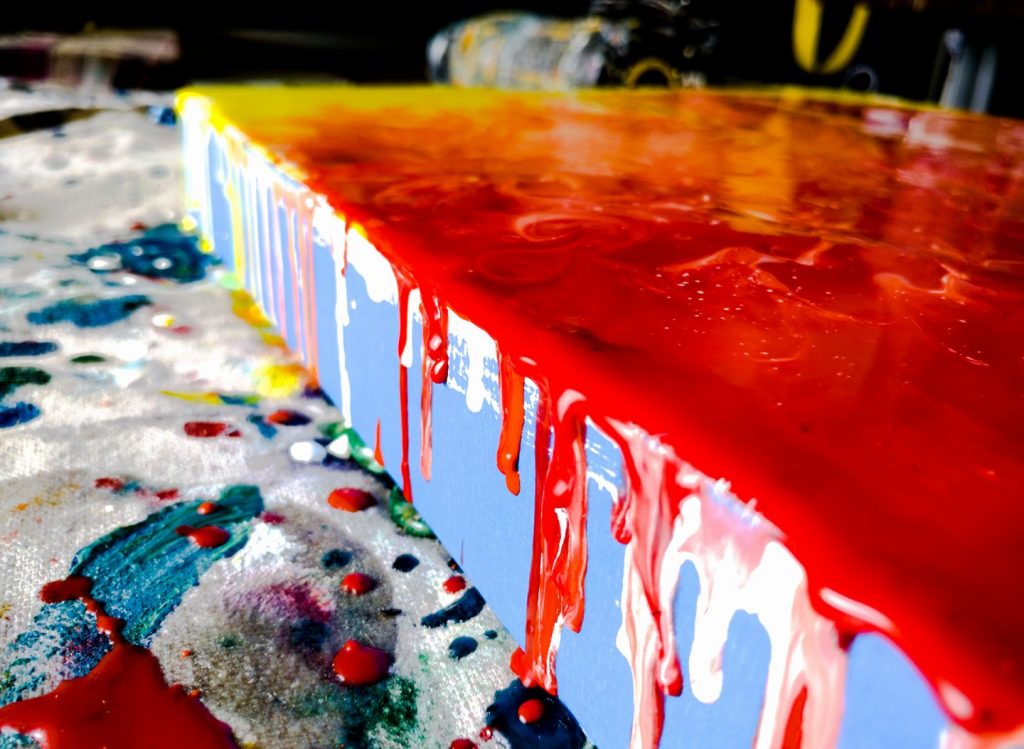
Featured Image: The side of an encaustic piece in progress.
[/et_pb_text][/et_pb_column][/et_pb_row][et_pb_row _builder_version=”3.0.47″ background_size=”initial” background_position=”top_left” background_repeat=”repeat”][et_pb_column type=”4_4″][/et_pb_column][/et_pb_row][/et_pb_section]